A listening primer
Six zarzuelas to know before dinner
Six well-known zarzuelas, who wrote them, when they appeared and what makes each a good first listen before an evening of Madrid's lyric theatre.
Reserve your table for the evening ↗Quick answer
Six titles make a good first list: La Gran Vía, La verbena de la Paloma, La revoltosa, Gigantes y cabezudos, Doña Francisquita and La corte de Faraón. They span 1886 to 1923, and most are set in Madrid or full of Madrid slang. They are examples of the genre, not a promise about what any dinner will sing.
La Gran Vía (1886)
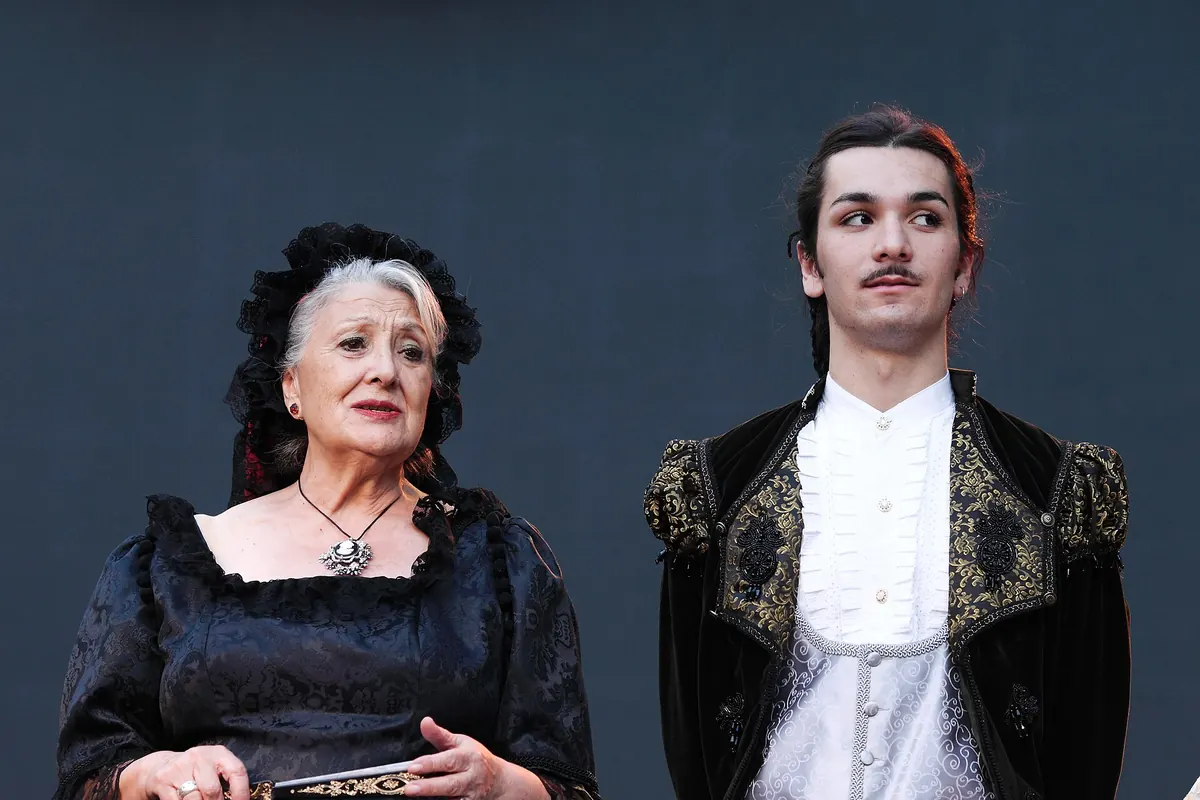
A one-act género chico by Federico Chueca and Joaquín Valverde Durán, with words by Felipe Pérez y González, premiered in July 1886. Wikipedia calls it a masterpiece of the género chico, and it travelled to Vienna, Paris and London. Its title names a Madrid avenue that was then only a planned project; building work began in 1910 and the last stretch was completed in 1929. Its numbers are dances of the day, among them a polka, a waltz, a tango and a pasodoble.
La verbena de la Paloma (1894)
Music by Tomás Bretón, words by Ricardo de la Vega. It premiered at the Teatro Apolo in Madrid in February 1894 and is set on the night of the festival of the Virgin of la Paloma, 14 August. The cast includes an elderly apothecary, a jealous typesetter and a singer in a café. The Teatro de la Zarzuela names it as a typical Madrid work. If you listen to one piece before dinner, this is a sensible first choice, because the story is simple: a festival night, two sisters, a rival and a jealous suitor.
La revoltosa (1897)
Ruperto Chapí wrote the music, to words by José López Silva and Carlos Fernández Shaw, and it premiered at the Teatro Apolo in November 1897. Wikipedia lists it among Chapí's género chico works, and the Teatro de la Zarzuela counts it among the typical Madrid zarzuelas. It was filmed several times. A 2024-25 production at the Teatro de la Zarzuela, staged with a modern bar set, is the photograph at the top of this site's home page. That photograph shows a theatre, not the restaurant.
Gigantes y cabezudos (1898)
Manuel Fernández Caballero composed it, and Wikipedia calls it the most successful of all his works. The title refers to giants and big-headed figures, the costumed parade characters of Spanish festivals. It is a género chico piece, named after those characters, and the theatre's history page lists it among the works first heard at the Teatro de la Zarzuela. If you know Spain's festival parades, the title will already make sense.
Doña Francisquita (1923)
Amadeo Vives's three-act zarzuela, based on a play by Lope de Vega, premiered at the Teatro Apolo in October 1923. Wikipedia calls it a classic of the genre and Vives's masterpiece, with a comic story of love triangles that ends happily. It has two arias that singers record often: a soprano song about a nightingale and a tenor song about fire and smoke.
La corte de Faraón (1910)
Vicente Lleó composed it, and it belongs to the género ínfimo, the lighter and bolder branch that grew out of the revue. Wikipedia says it was based on the French operetta Madame Putiphar. The theatre's own genre essay says audiences today often enjoy works closer to vaudeville, naming this and La gatita blanca. The Teatro de la Zarzuela staged a production in its 2024-25 season.
Who this isn't for
If you like to arrive without homework, ignore this list; the dinner needs none. If you want to know which of these will be sung at a given table, nobody can tell you in advance, because the restaurant chooses its repertoire. And if you want complete works rather than songs, a theatre staging is the way to hear them, with the spoken plot that holds the numbers together.
Frequently asked questions
Which zarzuela is best for a beginner?
La verbena de la Paloma is a good start: a short Madrid story set at a summer festival. The Teatro de la Zarzuela names it as a typical Madrid work.
Will these be sung at the dinner?
Not necessarily. They are examples of the genre. The restaurant chooses its repertoire and it can change.
Are zarzuela songs hard to follow?
Not for the ear. The music is tuneful and popular, and the stage action carries much of the story even if you do not understand the Spanish.
Sources